
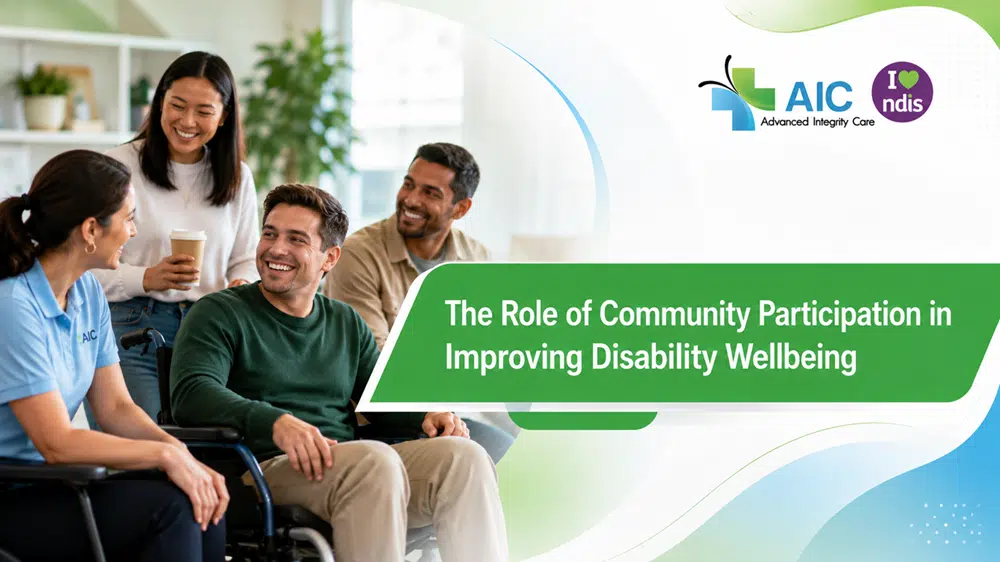
Being part of a community will really change your day-to-day life. Community participation offers a chance for people with disabilities to meet new friends, gain self-confidence, discover passions and learn independence.
First of all, you do not have to mean participating every week at big social events. Meeting new people can be as simple as finding a local gardening club, going to the library, an art class, and more physically-accessible sports activities or even volunteer work, shopping by themselves or meeting others within their neighbourhoods.
Meaningful participation, for people on disability support in NSW, should revolve around individual choice. That activity is the one aligned with that person with their interests, goals, skills and desired level of socialization or lack thereof.
In Australia, disability policy also identifies social inclusion and participation as a key outcome for people with disability. Australian Institute of Health and Welfare data shows that in 2022, 71% of Australians with disability aged 15 years or over did not leave their house to participate in any social activities. Get details on Disability Services in Morisset.
What Is Community Participation?
Community participation for people with disability means being actively involved in everyday community life rather than simply being present in a particular place.
Activities can include:
- joining sporting or recreation programs
- attending community events
- taking part in arts, music or craft groups
- visiting libraries, cafés or local attractions
- participating in cultural or faith-based activities
- volunteering
- learning to use public transport
- attending classes or workshops
- developing hobbies with other people
- meeting friends and building social networks.
Under the NDIS, eligible supporters may also help participants find and join activities that interest them, develop social skills, make friends and increase independence.
Therefore, social and community participation can be much more than recreation. It can become part of building practical skills and creating a more connected life.
How Community Participation Supports Wellbeing
1. Builds Social Connections
Perhaps the most immediately clear benefit of community participation is being able to meet other people.
Social isolation can affect anyone. But for some social participation can be more difficult to achieve, with those who have disabilities at more risk of loneliness and isolation.
Common community activities naturally lead to conversations and friendships. If, for example, a person has attended a weekly cooking class they may become increasingly acquainted with other attendees. These small interactions can form real social relationships over time.
In addition, staying in routine and delivering regular contact with the whole community is a good reason to engage more.
2. Improves Confidence and Self-Esteem
Doing something you are not used to can seem daunting at the start. However, achieving a new task could lead to the strong feeling of accomplishment.
There may be someone who needs assistance on the first occasion that they use the buses, ordering a meal or joining an area group. However, you may find that as they practice these things, they start taking care of portions of the experience on their own.
Each achievement can strengthen confidence.
Therefore, community access support is most effective when it motivates self sufficiency rather than simply performing all tasks for the participant. Get details on NDIS Provider in Cessnock.
3. Encourages Greater Independence
Community participation also provides opportunities to practise everyday skills in real situations.
For instance, an outing might involve:
- planning a journey
- checking a timetable
- handling money
- communicating with staff
- purchasing groceries
- making decisions
- navigating unfamiliar environments.
These experiences can support independent living skills because participants practise them in the places where they will actually use them.
The NDIS specifically identifies increased independence and social-network development as possible outcomes of capacity-building social and community participation supports.
4. Provides a Sense of Belonging
Everyone needs to feel they are a part of something.
Becoming a regular face at clubs, volunteering at an organisation or attending those community venues can help ensure that somebody is part of that environment and feels valued in it.
In addition, participation gives disabled people a platform through which they can share their own skills and humour, experience and ideas.
Even if participation is two-way, community inclusion works best and You should not just be supported, but you should actually have real choices and opportunities to both contribute and decide for yourself.
5. Supports Mental and Emotional Wellbeing
Healthy relationships and social connection are a critical component of overall mental health. (Healthdirect Australia: Good mental health is about having connections with other people and a sense of purpose.
Well designed community participation is able to contribute to these areas by providing enjoyable experiences and something for people to look forward to.
Activities like exercise, art, music, nature or social interaction could involve everything that allows the person to unwind and enjoy a break from their routine.
Regular activities can also provide a structure for the week without contributing to every day feeling the same.
6. Encourages Physical Activity
Not every community activity involves exercise. However, participation often naturally creates more opportunities to move.
Activities might include:
- accessible swimming
- walking groups
- dancing
- bowling
- gardening
- adaptive sports
- trips to parks or beaches.
Physical activity can also create opportunities for social interaction and may help reduce feelings of isolation.
Still, the activity should match the individual’s mobility, preferences and health needs. Enjoyment matters far more than forcing someone into an activity simply because it is considered “good for them”. Looking for a NDIS Provider in Newcastle?
Community Participation and Everyday Outcomes
| Type of activity | Skills that may develop | Potential wellbeing benefit |
| Community cooking class | Communication, following instructions, meal preparation | Confidence and social connection |
| Shopping trip | Budgeting, decision-making, communication | Greater independence |
| Local sports program | Teamwork, coordination and routine | Fitness and friendships |
| Art or craft group | Creativity, concentration and communication | Relaxation and belonging |
| Volunteering | Responsibility and workplace-style skills | Purpose and community connection |
| Public transport practice | Journey planning and problem-solving | Increased independence |
| Community events | Communication and social awareness | Broader social experiences |
| Gardening group | Practical skills and teamwork | Relaxation and connection with others |
Individual outcomes vary. Therefore, activities should always reflect what the participant actually wants to achieve.
Removing Barriers to Community Participation
Convening community activities does not, in itself, make them accessible.
There have been some obvious practical obstacles identified in Australian data. As an example, AIHW found that in 2019, 23% of people with disabilities aged 15–64 experienced problems getting to places they needed to go.
Some people find it difficult to travel, or buildings cannot be accessed, some fear communicating with strangers in unfamiliar places, the cost or suitable help may not be available.
Additionally, attitudes can create barriers. Inclusion can be challenged by stigma, unconscious bias and a general lack of understanding of the limits of disability (Australia’s Disability Strategy)
Thus, a quality disability support provider in NSW should evaluate more than just whether it can arrange outings. Support may include preparation, identifying the most accessible place to go, understanding sensory preferences, facilitating interaction, or building confidence slowly. Looking for a Disability Services in NSW?
Person-Centred Community Participation Matters
Two people with similar support needs may want completely different things.
One participant may enjoy crowded sporting events. Another might prefer a quiet café, photography walk or library group.
Neither choice is better.
That is why person-centred disability support matters. Participants should have a genuine say in:
- where they go
- what activities they try
- who supports them
- how much assistance they receive
- what skills they want to develop
- whether they participate individually or in groups.
Support workers can offer suggestions. However, they should never turn community participation into a fixed timetable that ignores the person’s interests.
Related Services:
» Disability Services in Newcastle
» Respite Care Services in NSW
» Medication Management in NSW
» Transformative Power of Disability Services
How Advanced Integrity Care – NSW Can Support Community Participation
Community participation support at Advanced Integrity Care – NSW can be directed toward assisting people in engaging with activities and experiences that are truly meaningful for them.
The support provided may help you with planning outings, participating in activities to build up your social confidence, connect with local services or practice day to day community skills based on their individual needs and goals.
Most vital of all the participant stays at the core of the process.
For another individual progress could be simply ordering coffee independently at the local coffee shop. For one, it might be taking up a sport or travelling to join an activity, letting some new friends in.
Over time, these small wins add up to greater choice, confidence and control over day-to-day life.
Related Articles:
» How Disability Support Can Help You Reach Personal Goals
» Looking for Reliable Disability Support in NSW?
» How to Choose the Right Disability Support Provider in NSW
» Guide to Disability Services & Support in Newcastle NSW
» Disability Support Services in Australia: Types, Benefits & Eligibility
Building a More Connected Life
At the end of the day, community participation for people with disabilities should be about more than just leaving the house.
It is about the opportunity to access, participate, contribute, learn, connect and belong.
But given the proper support, it allows them to follow their interests whilst learning transferable skills and furthering community ties. Additionally, the engagement becomes more significant when activities are selected around individual goals rather than a standard program.
Finding things to do for the sake of filling up time is not a goal that should be pursued for people with disability and their families across NSW. Instead, they create opportunities for a more autonomous, connected, and intricate lifestyle.

