
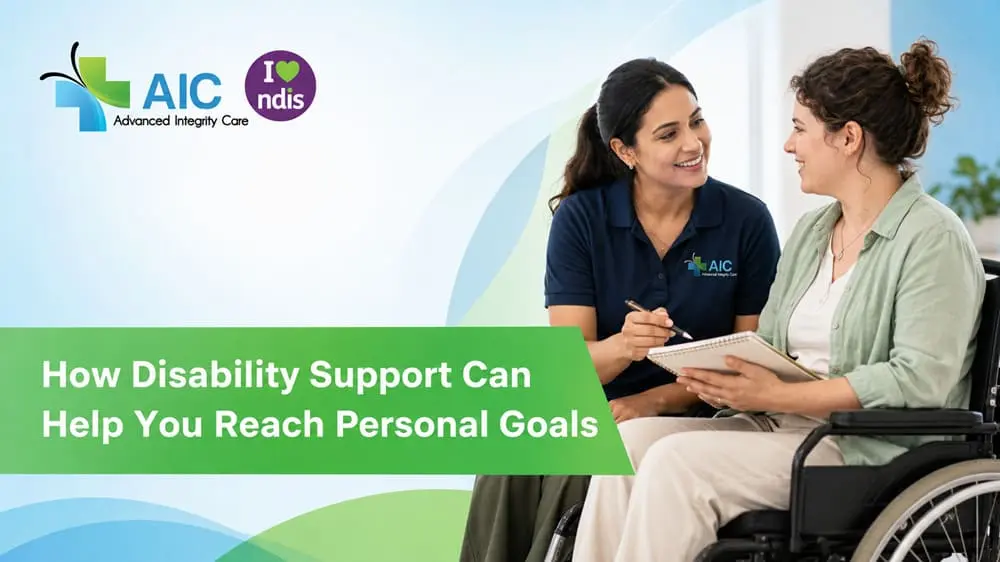
Everyone is trying to accomplish something. For another person, the target may be learning to prepare his or her own dinner. For someone, it could be getting a job, for another joining local sports or using public transport and just being more comfortable going outside.
Having it incorporated into the best disability support services in NSW can definitely make those goals appear more realistic for people with disabilities. Effective support should not do things for a person but encourage the exercise of choice, practical skill and full participation in day to day living.
Advanced Integrity Care – NSW is more than just your run of the mill care provider — we approach all facets with a person-centred lens! Assistance may also be focused on that which is important to the person and the life they want to live.
What Are Personal Goals in Disability Support?
Personal goals are outcomes that a person wants to work towards in their everyday life. Under the NDIS, participants choose their own goals, which may relate to independence, employment, education, social activities, relationships or developing new skills. The NDIS recommends keeping goals clear and focused on what is important to the participant.
Common NDIS personal goals may include:
- Becoming more independent at home
- Learning cooking, cleaning or budgeting skills
- Using public transport confidently
- Making new friends
- Participating in community activities
- Starting study or training
- Finding or maintaining employment
- Improving communication and social confidence
- Taking part in sport, recreation or hobbies
Most importantly, goals should reflect the person’s own interests and priorities rather than what somebody else thinks they should achieve. Get details on Disability Services in NSW.
How Disability Support Turns Goals Into Practical Steps
A big goal can at times be intimidating. So an excellent part that a disability support worker does is to take the big goal and break it down into smaller, more achievable objectives.
A person with an aspiration of travelling independently, for instance might first practice walking to the nearest bus stop with support. Then they would learn to read a schedule, swipe a card and identify the stop. In time, you will complete the trip with less and less help.
This gradual approach can develop both practical ability and confidence.
Example Goal Progression
| Personal goal | Starting point | Support approach | Possible progress |
| Cook independently | Needs assistance preparing meals | Practise simple recipes and kitchen safety | Prepare selected meals with less help |
| Use public transport | Relies on family for transport | Route planning and supported travel practice | Travel familiar routes more independently |
| Join community activities | Rarely attends activities | Identify interests and attend local groups | Participate regularly and build connections |
| Improve money skills | Finds budgeting difficult | Practise shopping and weekly budgeting | Make everyday spending decisions confidently |
| Find employment | Limited workplace experience | Build routines, communication and work skills | Become more prepared for employment |
Progress will naturally vary between individuals. Therefore, support should remain flexible and respond to each person’s abilities, circumstances and preferences. Looking for a Disability Services in Chisholm?
Building Independence Through Daily Living Support
For many people, greater independence begins with ordinary daily activities.
Daily Living Support may help with making meals, home routines, personal care tasks, shopping or arranging appointments. But good support doesn’t always look like actually doing those things for someone.
Rather, the focus can be on wherever appropriate enabling full participation.
A support worker would not just make breakfast — they might encourage the participant to select what ingredients to use, cook some part of the meal and do the dishes after it — instead they would encourage independence.
These daily experiences would accumulate, crafting skills for life.
The supports that help someone work towards their daily living needs and build independence and skills are part of an individual plan, with varying levels of funding provided through the NDIS.
Community Participation Can Support Bigger Life Goals
Personal goals are not limited to the home.
Many people want to meet others, develop friendships, join community groups or simply become more comfortable participating in activities outside their usual environment.
Social and community participation support may assist people to explore activities that match their interests. Depending on individual circumstances, this might involve attending:
- Community events
- Sporting activities
- Art or music groups
- Libraries
- Social groups
- Recreation programs
- Shopping centres
- Local appointments
- Training or educational activities
Capacity-building support under the NDIS may assist National Disability Insurance Scheme (NDIS) participants meet their needs by learning social skills, establishing networks, making friends and becoming more independent through community participation.
The most important thing about meaningful participation is… it is not just going nowehre. It’s about opportunities to choose, communicate with other people and be integrated into the community. Get details on Disability Services in Newcastle.
Developing Skills for Employment and Education
Employment or study can be an important long-term goal.
However, reaching that goal may involve developing several smaller skills first. Someone may need to improve time management, communication, transport confidence or workplace routines before starting work.
Disability support may therefore assist a person with:
- Building morning routines
- Travelling to training or work
- Developing communication skills
- Practising appropriate workplace behaviour
- Improving organisation
- Managing money
- Becoming comfortable working within a team
The NDIS notes that community participation can help people develop skills that may contribute towards future employment, including using public transport, working with others and managing money.
Confidence Often Grows Alongside Independence
You never get to a personal goal by doing something big.
And sometimes the greatest shift is confidence.
Picture an individual who feels uneasy at the prospect of walking into a bustling café on their own. Once they learn from the support which they receive, as well as exposure and practice repetition, in time they would potentially order their own meal, settle the payment and/or ect staff throughout a conversation themselves.
Perhaps for another human that achievement seems, well, microscopic. But for the person, it is a major step toward becoming more independent.
So, disability support needs to account for progress not just outcome. Looking for a NDIS Provider in Hunter?
Person-Centred Support Keeps You in Control
Effective person-centred disability support starts with listening.
The person receiving support should have a meaningful say in:
- What they want to achieve
- How they prefer to receive assistance
- Which activities they enjoy
- What makes them uncomfortable
- Which skills they want to develop
- How quickly they want to progress
NDIS goals are designed around the participant’s own aspirations and can include building independence, studying, working, participating socially or strengthening relationships.
Consequently, two people with similar disabilities may have completely different goals and support needs.
And that is perfectly normal.
Tracking Progress Without Creating Pressure
Goal setting works better when progress can be noticed.
However, progress does not always happen in a straight line. Some weeks will be easier than others, while circumstances, health, confidence or interests can also change.
A simple goal-tracking approach may include:
Goal → Action → Practice → Review → Adjust
For example:
Goal: Learn to shop independently.
Action: Write a short grocery list.
Practice: Visit a familiar supermarket with support.
Review: Identify what went well and what was difficult.
Adjust: Practise finding products and paying at the checkout.
Small improvements can eventually lead towards a much larger outcome.
NDIS goals can also be reviewed, and participants may change them when their circumstances or priorities change.
Related Services:
» Independent Living Service in NSW
» Community Access Service in NSW
» Respite Care Services in NSW
Choosing Disability Support That Matches Your Goals
When selecting disability support services in NSW, consider whether the provider takes time to understand your individual goals.
A helpful support team should communicate clearly, respect your choices and encourage independence wherever possible.
It can also help to ask questions such as:
- Will my support be based on my personal goals?
- Can support change as my confidence improves?
- Will I have input into my daily activities?
- How will my progress be discussed?
- Can support help me participate in the community?
Under the NDIS, funded supports must meet relevant eligibility rules, including being related to disability and helping the participant work towards their goals.
Therefore, participants should always check what their individual plan allows rather than assuming that every service or activity will automatically receive NDIS funding.
Related Articles:
» Disability Support Services in Australia: Types, Benefits & Eligibility
» Understanding Disability Services in NSW: Practical Guide for Families
» How Personalised Disability Support in NSW Helps You Reach Your Goals?
» Choosing Personalised Disability Care in NSW Without the Stress
» How to Choose the Right Disability Support Provider in NSW?
Working Towards Your Goals with Advanced Integrity Care – NSW
Personal, big or small objectives. What matters is they have meaning to you.
Disability support at Advanced Integrity Care – NSW can help with anything from developing skills to more community involvement and having a go at regular tasks.
Be it independent living, being actively involved in the community, acquiring life skills or wanting to be more socially connected, meaningful support can take a thought and break that down into achievable actions.
Disability support done well is not about running people’s lives, after all. It is about supporting them in a way that means they have more control over how they live.

