
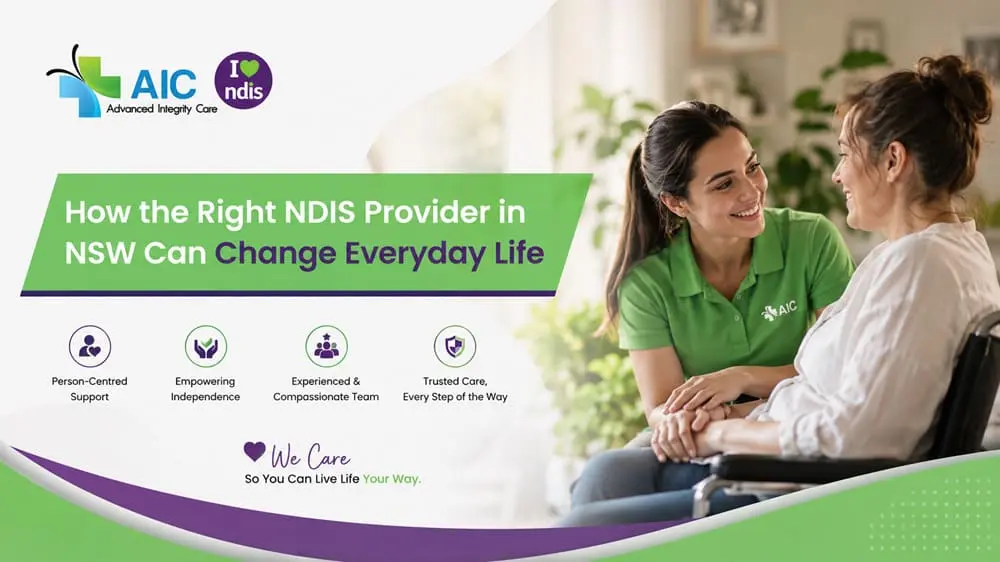
For children with a disability every day living can be made more complicated than it needs to be. Depending on the circumstances, this support could range from making it to an appointment, to preparing a meal, getting you to work, learning a new skill or even just joining friends for coffee. And that is why selecting an appropriate NDIS provider in NSW can make all the difference with day-to-day living.
A good provider is not just a fill in a shift or job completed. Rather, they pay attention to what matters to the participant, seek to understand personal objectives and support confidence building over time. Crucially, as an NDIS participant, you have choices about which providers you see and the role of providers is to help support a participant in achieving their plan goals.
For participants and their families throughout New South Wales, appropriate placement might provide increased autonomy, more settled daily routines and not least a greater say in day to day decisions.
Everyday Support Should Fit the Person
Not every participant needs the same kind of support.
Some people require assistance with personal care whereas others may simply want support with shopping, public transport or social/ community based activities. For instance, one individual may need daily intensive support whereas another participant may only need a few hours of support per week.
Hence, a reliable NDIS service provider in NSW will never consider support as a package.
Support should not be dependent on a participant’s diagnosis, but rather their preferences, any routines which have been established and support for communication in order to reach their goals. As an example, if someone wants to build their confidence in cooking alone then a support worker might prepare meals alongside them rather than doing all the cooking.
That small difference matters. Practical support can also evolve into capacity building over time. Get details on Disability Service in NSW.
What Can the Right Provider Change?
The effects often appear in ordinary parts of the day rather than dramatic moments.
| Area of daily life | Basic task-focused support | Person-centred NDIS support |
| Morning routine | Completes tasks quickly | Works around preferred routines |
| Shopping | Purchases items for participant | Supports budgeting and shopping skills |
| Cooking | Prepares meals | Builds confidence with meal preparation |
| Community access | Provides transport only | Encourages social participation and independence |
| Appointments | Takes participant to appointment | Helps with planning and communication if requested |
| Daily living | Focuses on immediate needs | Links support with longer-term goals |
| Decision-making | Makes assumptions | Asks the participant what they prefer |
The difference may seem simple. However, those everyday choices can influence confidence, independence and quality of life.
Greater Independence, One Skill at a Time
Having independence does not mean doing everything by yourself†
What it does mean however could be exercising much more control in how the job gets done.
That could mean a participant might need a lot of help in the beginning getting around on public transport. Yet they can work out a known walk with patient help, learn how to read timetables and finally travel independently.
In much the same way, a person who has difficulty with household chores might settle into an easy weekly pattern for doing laundry or preparing meals or shopping.
This means that the right disability support provider in NSW should not just jump to the conclusion that they are best placed to take over.
Progress might come slowly. That’s completely normal. The support here is not as significant that it moves in the direction the participant wants to think.
Reliable Support Can Make Routines Less Stressful
Consistency is easy to underestimate.
Imagine organising your week around a support worker who regularly arrives late or changes shifts with little notice. Even fairly small disruptions can affect appointments, employment, study, family plans and community activities.
Therefore, reliability should form an important part of quality NDIS support services in NSW.
Participants may benefit from providers who communicate clearly about:
- support schedules
- worker changes
- cancellations
- service costs
- responsibilities
- changes to agreed support.
A service agreement can also help clarify what support will be provided, the associated costs, payment arrangements and how either party can change the agreement. The NDIS recommends discussing these details when beginning work with a provider. Looking for a NDIS Provider in Newcastle?
The Right Support Worker Relationship Matters
Qualifications, training and experience are important. However, personality and communication style matter too.
A participant may spend several hours each week with a support worker. Consequently, they should feel comfortable expressing preferences, asking questions and saying when something isn’t working.
A suitable worker should also understand boundaries.
They should not make unnecessary decisions on behalf of the participant simply because it is quicker. Instead, they should encourage choice wherever practical.
The NDIS Code of Conduct requires people delivering NDIS support to respect the rights of participants to exercise their own autonomy, protect privacy and provide support in a safe and competent manner. The Code applies to registered and unregistered NDIS providers and workers.
Community Participation Can Become Easier
When it comes to disability support, it is not just a matter of what goes on at home.
For many contributors, a noteworthy existence additionally includes previousimes, friendships, education and the indigenous community.
As a result, NDIS community participation support may be helped by attending social groups, recreational activities or community events or appointments depending on the participants’ funded support and goals.
For instance, someone with a passion for swimming may need help getting to the pool in their area. Put another way, you may choose to go visit the library for AnotherAn additional party may prefer this kind of course or join in at community activities.
The activity itself isn’t the whole point.
Rather, regular community participation may help a person build relationships, practise skills and feel more connected to their community. Get details on Community Access Service in NSW.
Choice and Control Should Remain With the Participant
One of the central ideas behind the NDIS is choice and control.
Participants can generally choose which providers they work with. However, provider requirements depend partly on how funding is managed. For example, participants with NDIA-managed funding must use registered providers for those supports. Participants with self-managed or plan-managed funding can usually use registered or unregistered providers for many supports, although some regulated supports must come from registered providers.
Participants also control what plan information they share with providers. The NDIS states that participants can decide which providers can access relevant parts of their plan and what permissions they receive.
So, a supportive provider shouldn’t pressure somebody into sharing more information than necessary.
Instead, they should explain why particular information may help them deliver suitable support.
What Should You Look for in an NDIS Provider in NSW?
A polished website doesn’t necessarily tell you how a provider will treat participants once services begin.
Therefore, before choosing an NDIS provider near you in NSW, look deeper.
Consider whether the provider:
- listens before recommending services
- communicates clearly
- respects personal and cultural preferences
- discusses goals rather than only available shifts
- explains fees and service agreements clearly
- provides suitably skilled workers
- responds properly to feedback
- values participant choice
- offers continuity wherever possible
- discusses how support can adapt when circumstances change.
Additionally, meeting a potential provider before commencing support can help participants determine whether the relationship feels comfortable. The NDIS specifically recommends meeting providers and discussing how you will work together.
Related Services:
What If a Provider Is No Longer the Right Fit?
People’s needs change. Sometimes the provider does too.
A service that worked well six months ago may no longer suit changing routines, goals or circumstances.
Participants can raise concerns and ask providers to adjust their services. Furthermore, if problems remain unresolved, participants can change providers, subject to relevant service-agreement notice requirements.
That choice matters.
A participant shouldn’t feel permanently locked into support that no longer works for them.
Likewise, providers should create an environment where participants feel safe giving feedback. The NDIS Quality and Safeguards Commission expects providers to respond appropriately to concerns and complaints about support quality and safety.
Related Articles:
» Understanding Disability Services in NSW
» How Personalised Disability Support in NSW Helps You Reach Your Goals?
» How NDIS Support Services in NSW Improve Quality of Life?
» What Does Independent Living Really Mean for NDIS Participants?
» Nursing Services for NDIS Participants in Newcastle
Small Improvements Can Add Up
Good disability support often only becomes evident in tiny details.
Everyone signs- a participant begins cooking breakfast with reduced support Someone gets used to taking a bus to their favourite café. Another person participates in a social event they had previously missed because it just seemed too hard to arrange transport.
Taken individually, these steps may seem small. But together they can redefine life as we know it.
Advanced Integrity Care – NSW -It should always be about the person-their routines, preferences, strengths and goals. Providing quality NDIS support is not about dominating someone’s day. Instead, it just needs to offer the correct support to ensure that the participant is able to have a say in how that particular day goes.
For you, support can be more than just practical help when your participant finds NDIS providers in NSW that listens, communicates and adapts.
It can be a stepping stone towards more confidence, participation and independence.

