
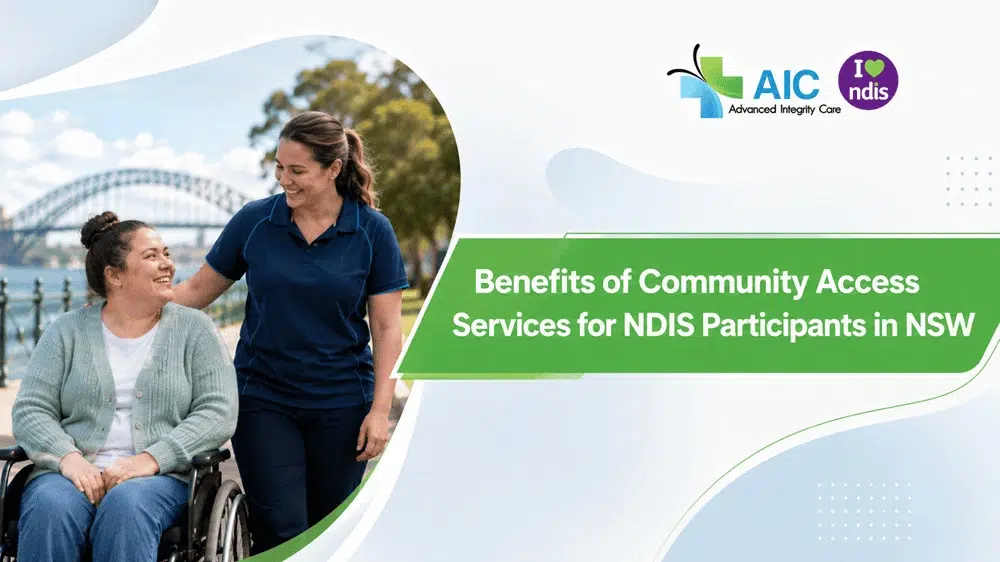
Maintaining connections with the community can improve confidence, health and general quality of life. But for a person living with disability, it is not always so easy to go out whether its local community event or being part of a social group or even going shopping. Transport barriers, anxiety, mobility challenges and limited support can all hinder participation in the community.
This is where community access services — in New South Wales and elsewhere can assist. These supports help people with disabilities to engage in the community, develop skills and participate in meaningful relationships. Even more significantly, part of community access is not simply about leaving home. Making choices, feeling included and doing the things that give meaning to our daily lives.
At Advanced Integrity Care – NSW, community participation support focuses on the person, their interests and their individual goals.
What Are Community Access Services?
Community access services support people with a disability to engage in social, volunteer, educational and everyday community activity. A support worker instead may assist a participant with transport, provide some one-on-one personal assistance; Or offer encouragement or guidance while the participant participates.
For example, community access support may include:
- Visiting a library, café, park or shopping centre
- Attending medical or allied health appointments
- Joining an art, music, fitness or hobby group
- Participating in local festivals and community events
- Going swimming, bowling or to the cinema
- Learning how to use public transport
- Attending training, volunteering or educational activities
- Catching up with family members or friends
While these activities seem trivial, they frequently provide good opportunities for learning and networking. Consequently, participants may feel more self-assured dealing with making choices and conducting their everyday lives. Get details on Community Access Service in NSW.
Why Community Connection Matters
Social isolation preys on the young and old alike. In contrast, participants with communication, mobility or behavioural difficulties may be at greater risk of becoming isolated from their local community.
Across the board, regular social and community involvement can help support emotional wellbeing through providing participants a positive activity or event they can look forward to. Also, if you meet people and visit well-known places, that can contribute to creating a feeling of belonging.
Community connection may also help participants:
- Improve communication and social skills
- Develop friendships and support networks
- Increase confidence in public settings
- Practise decision-making
- Build independence
- Explore employment or volunteering opportunities
- Improve physical and emotional wellbeing
So more meaningful community access should be linked to what the participant actually engages in. You would be happy with a group activity, at the opposite end of the scale another member may enjoy a quiet walk, a small craft class or even just a shopping trip with you.
Common Community Access Supports
The type of assistance provided should depend on the participant’s goals, abilities, preferences and NDIS plan.
| Community access support | Example activity | Possible participant benefit |
| Social participation | Visiting a café or community group | Builds communication and social confidence |
| Recreational support | Swimming, walking, bowling or art | Encourages wellbeing and enjoyment |
| Transport training | Learning a bus or train route | Supports greater independence |
| Daily living activities | Shopping or visiting the bank | Develops practical life skills |
| Appointment support | Attending healthcare appointments | Reduces stress and improves organisation |
| Education and volunteering | Joining a course or volunteer role | Builds experience, purpose and routine |
A participant may start with close one-to-one assistance. Then, as their confidence grows, the support worker can step back where appropriate. This gradual approach gives the person time to learn without feeling rushed. Looking for a Independent Living Service in NSW?
Community Access Should Be Participant-Led
NDIS community participation support starts with listening Support workers should not base activities around convenience or availability. Rather, the participant should really have a say in where to go, who supports them and what they want.
For example, a participant wishes to improve their cooking skills. Community access planning could involve a trip to the supermarket, selecting ingredients and managing a budget while joining in on a local cooking class. Thus one activity is able to help multiple goals at in the same time.
Likewise, in this example if a participant love animals they may want to go visit the wildlife park, volunteer with an animal organisation or attend community events related to pets. All of which often seem more special than a date night at your local restaurant.
How Support Workers Help Participants Build Independence
A skilled disability support worker in NSW offers more than physical assistance. They also encourage the participant to try new tasks, communicate their choices and manage everyday situations.
During a community outing, a support worker may help the participant:
- Plan the activity before leaving home
- Check accessibility and transport options
- Manage money and purchases
- Communicate with staff or community members
- Understand schedules and directions
- Stay safe in unfamiliar environments
- Manage sensory overload or anxiety
- Review what went well after the activity
However, support should not remove every challenge. Instead, it should help the participant manage challenges in a safe and achievable way. Over time, the person may need less prompting or direct assistance. Get details on Respite Care Service in NSW.
Individual Support Versus Group Community Activities
Both individual and group support can provide positive outcomes. Nevertheless, the right choice depends on the participant.
| Individual community access | Group community access |
| Activities follow personal interests | Activities involve several participants |
| Offers one-to-one assistance | Encourages group interaction |
| May suit complex support needs | May suit participants seeking friendships |
| Allows flexible timing | Usually follows a planned schedule |
| Can reduce social pressure | Creates shared experiences |
Others may require a combination of the two. This could include attending a group activity once per week, and also receiving individual support for shopping or appointments.
Removing Barriers to Community Participation
There are numerous potential barriers that could keep someone from engaging in community activities. These could be places they find hard to reach, the wrong transport, not being able to communicate with people as well as anxiety or a past bad experience.
Such barriers should be identified beforehand by the employer or a reliable community access provider in NSW before the outing. For example, the provider may ask a venue to confirm wheelchair access, quiet space available, accessible toilets and parking. Additionally, the support worker can prepare visual schedules or communication tools as required.
Careful planning can reduce uncertainty. Yet, flexibility is important because community activities do not always go according to plan. It may be crowded at a venue, the transport can arrive late or the participant simply gets too tired. In such cases the support worker must remain calm and adjust the plan. Looking for a Medication Management Service in NSW?
Choosing the Right Community Access Provider
Participants and families should feel comfortable asking questions before choosing a provider. A suitable provider should respect the participant’s preferences and communicate clearly.
Important points to consider include:
- Does the provider involve the participant in activity planning?
- Are support workers experienced and appropriately trained?
- Can services accommodate changing support needs?
- Does the provider understand local NSW communities?
- Are activities linked to the participant’s NDIS goals?
- How does the provider manage safety and incidents?
- Can participants provide feedback or request a different worker?
Compatibility also matters. A participant may feel more relaxed with a support worker who shares similar interests or understands their communication style.
Related Services:
Community Access Support from Advanced Integrity Care – NSW
At Advanced Integrity Care – NSW, we understand that every participant has different interests, routines and ambitions. Therefore, our approach to community access services in NSW centres on choice, dignity and practical support.
We help participants connect with the community, pursue appointments, engage in recreational activities, and develop daily living skills. Moreover our efforts should go in making the experience positive so that confidence builds up over time.
Be it going to a community class, getting practice in using the public transport, being part of family occasions or simply having regular outings, support should aim to be respectful and meaningful.
Related Articles:
» How NDIS Support Services in NSW Improve Quality of Life?
» Why Professional Wound Care Is Important for Faster Healing?
» Community Access Support: What’s Included and How It Helps
» How Community Participation Improves Wellbeing for People with Disability?
» Why Respite Care Is Essential for Carers & Families?
Staying Connected Builds a Stronger Life
Having access to your community can mean friendships, opportunities and more independence. It may start with a brief walk to the local coffee shop or an assisted shopping trip. However, those little steps can grow to stronger skills and more confidence over time.
The right NDIS community access support helps the participants remain active, make choices and be connected with places and people around them. Above all, they can participate in community life however they choose.

