
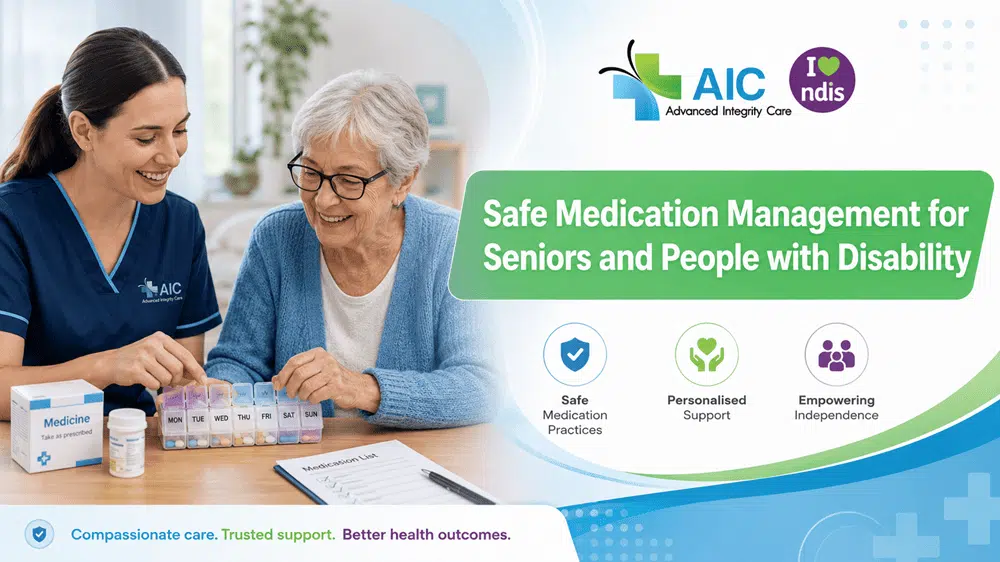
While the right medication can enhance health, comfort and independence. However, it can also pose a risk when tablets, liquids, cream injections or inhalers are not handled properly. Safe Medication Management is not just about “taking pills on time—especially for seniors and people with disabilities. It includes clear routines, proper storing, communication with health professionals, family involvement and trained help of caretakers.
It is treated with care, respect and understanding of the individual at Advanced Integrity Care – NSW for Medication Support. More importantly, everyone has the right to be confident in what they take, why they are taking it, and when to seek help.
Why Safe Medication Management Matters
Most senior adults and people with disabilities are on multiple medicines daily. Some drugs that we know about can be used for more chronic diseases like diabetes, epilepsy, pain, blood pressure and anxiety medication asthma heart disease etc. Others, on the other hand, may only be required for a while after infection, illness or surgery.
But mistakes can occur if medications are mixed, missed, given double doses, expired or taken at inappropriate times. Consequently, an individual feels dizzy, drowsy, disoriented, nauseous or faint. Unsafe medicine use may result in falls, hospital visits or significant changes in health status.
Therefore, a good medication management plan helps reduce mistakes and supports safer daily living. Get details on Medication Management Service in NSW.
Common Medication Risks for Seniors and People with Disability
Seniors and people with disabilities may face extra challenges when managing medicines. For example, poor eyesight can make labels hard to read. Reduced hand strength can make bottles difficult to open. Memory changes may also affect timing. In addition, some people rely on carers, family members or support workers, so communication must stay clear.
| Common Risk | What Can Happen | Safer Practice |
| Missed dose | Symptoms may return or worsen | Use reminders and Webster-pak style packing |
| Double dose | Side effects or overdose risk | Record every dose after it is taken |
| Wrong medicine | Unsafe reaction or poor treatment | Check name, dose, time and route |
| Expired medicine | Reduced effect or possible harm | Review medicine cabinet monthly |
| Poor storage | Medicine may lose strength | Store as directed on label |
| Mixed instructions | Confusion between carers | Keep one updated medication chart |
In addition, natural products, vitamins and herbal remedies were identified as possible drugs that have such a drug interaction with any prescribed medicines. So, see them as a product that should be discussed with a GP or pharmacist.
What Is Medication Support in Disability and Aged Care?
There is medication support for seniors and people with disability in the form of reminders, open packets, read instructions, check dose times, observe side effects, and assist the person in sticking to their routine. Support workers should only provide assistance as defined within their role, training and care plan.
Clinical decisions are often made by nurses, pharmacists and doctors. Disability support workers and aged care support staff help with daily living under continuous supervision.
This makes teamwork very important. Specifically, the person, family, GP, pharmacist, nurse and care provider should all understand the medication plan. Looking for a Wound Care Service in NSW?
Key Parts of a Safe Medication Management Plan
A strong medication plan should be simple, current and easy to follow. It should also suit the person’s abilities, culture, communication style and daily routine.
| Medication Plan Item | Why It Matters |
| Current medicine list | Helps everyone know what the person takes |
| Dose and timing | Reduces missed or repeated doses |
| Allergy information | Prevents unsafe reactions |
| Side effect notes | Helps carers respond early |
| GP and pharmacy details | Makes follow-up easier |
| Emergency instructions | Supports faster action during concerns |
| Review date | Keeps the plan updated |
Furthermore, over-the-counter things like pain relief pills,eye drops, creams, supplements and inhalers should be a part of the plan.
Medication Reminders and Daily Routines
For many, medication is safer with routine. These reminders can be a phone alarm, wall chart, pill organiser, medication app or prompt from a support worker. However, the system should be fully aligned with the level of confidence and capability a person has.
Some set their routines with morning and evening meals. Some could require assistance before community access, sleep, therapy or medical appointments. Hence a rush in the car should not be a feeling ever.
A simple daily routine may include:
- Wash hands before handling medicines.
- Check the person’s name and medicine instructions.
- Confirm the right time and dose.
- Support the person to take medicine safely.
- Record the dose if required.
- Watch for unusual symptoms.
- Report concerns quickly.
This process looks simple. However, consistency prevents many common mistakes. Get details on Nursing Services in NSW.
Storage of Medicines at Home
Safe storage matters, especially in shared homes, supported accommodation and family settings. Medicines should stay in original packaging unless a pharmacist has packed them into a dose administration aid. Also, heat, moisture and sunlight can affect some medicines.
For example, bathrooms are often not ideal because of steam and temperature changes. Meanwhile, some medicines must be refrigerated. Others need locked storage to keep children, visitors or confused adults safe.
| Medicine Type | Storage Tip |
| Tablets and capsules | Keep in a cool, dry place |
| Liquid medicines | Follow label instructions after opening |
| Insulin or some injections | Store as advised, often in fridge |
| Creams and ointments | Keep lid closed and check expiry |
| Inhalers | Keep clean, dry and accessible |
| Webster-pak/dose packs | Store safely and use in order |
Moreover, expired or unwanted medicines should not be thrown into household bins. A local pharmacy can usually guide safe disposal.
Signs a Medicine May Be Causing a Problem
Medicine side effects can look different from person to person. Seniors may not always say, “This medicine is making me feel unwell.” Instead, they may seem more tired, confused, dizzy or unsettled. People with communication disabilities may show changes through behaviour, appetite, sleep or movement.
Watch for:
- Sudden confusion or unusual drowsiness
- Dizziness, faintness or unsteady walking
- New rash, swelling or itching
- Nausea, vomiting or diarrhoea
- Breathing difficulty
- Mood changes or agitation
- Loss of appetite
- Increased falls or near-falls
If symptoms seem serious, seek urgent medical help. If symptoms are mild but concerning, contact the GP, pharmacist or nurse for advice. Looking for a Respite Care in Service in NSW?
The Role of Pharmacists and Medication Reviews
All pharmacists also have a very important role in safe medication management in NSW. Can explain the way medicines operate, search for connections, recommend dose compression and assist persons in knowing adverse effects.
A medications review will be helpful if: you take multiple medicines, have recently been discharged from the hospital, are confused about your medications, experience side effects with specific drugs or visit multiple doctors. Reviews may also sense the removal of duplicate medications and simplify regimens
| When to Request a Review | Possible Benefit |
| New diagnosis | Ensures medicine suits current needs |
| Hospital discharge | Reduces confusion after changes |
| Frequent side effects | Helps identify problem medicines |
| Many daily medicines | May simplify the schedule |
| Memory issues | Supports safer reminders |
| New support worker team | Improves consistency |
Supporting Choice, Dignity and Independence
Safe care should never mean ownership removed from the individual. The right of seniors and people with disability to the information necessary to make a decision, to the extent possible. Support workers are required to be supportive and explain what actions they are taking, seek consent, though respecting the individual’s set routines.
A person might favor taking the medicine with tea, following breakfast, or after a long nap in a still room. Someone else might want a family member involved. These preferences are important, as comfort is conducive to cooperation and safety.
In addition, support should build independence. Other people just need a reminder. Others may need physical assistance. At the same time, certain individuals may suffer from physical disability or some ailment or cognitive-related changes which require full-time support. A person centred approach seeks the minimum level of help necessary, taking care not to deny choice. Get details on Independent Living Service in NSW.
How Advanced Integrity Care – NSW Can Help
Advanced Integrity Care – NSW provides respectful, reliable & person centred care for seniors & people with disability. As part of an agreed care plan our team can provide medication reminders, support with routines, report changes, talk to families about progress and communicate with health professionals.
Finally, we emphasize dignity, safety and independence. We know that routine medicines can be stressful, particularly if it turns out to involve multiple medications. We provide for supportive calmness, structured and unwinds it in a way which fits neatly into the world they have to live in anyway.
If you or your loved one needs medication support services in NSW, professional care can make a real difference.
Related Articles:
» Medication Management Under the NDIS: What’s Covered?
» Benefits of NDIS Wound Care & Medication Management in New South Wales
» How can Nursing Services can assist with medication in Newcastle?
» NDIS Nursing Services for Aged Care Patients
» NDIS Home-Based Nursing Care for Chronic Illnesses
Protecting Health Through Responsible Medication Management
The safe delivery of medication protects health, quality of life and independence. But not without a medicine box. This needs planning, conversation, more conversations, periodic reviews and trusted mentorship. Older people and people with disabilities are able to manage their medicines more safely and confidently at home, with the right support.
Advanced Integrity Care – NSW is committed to helping people live with dignity, comfort and better daily support.

