
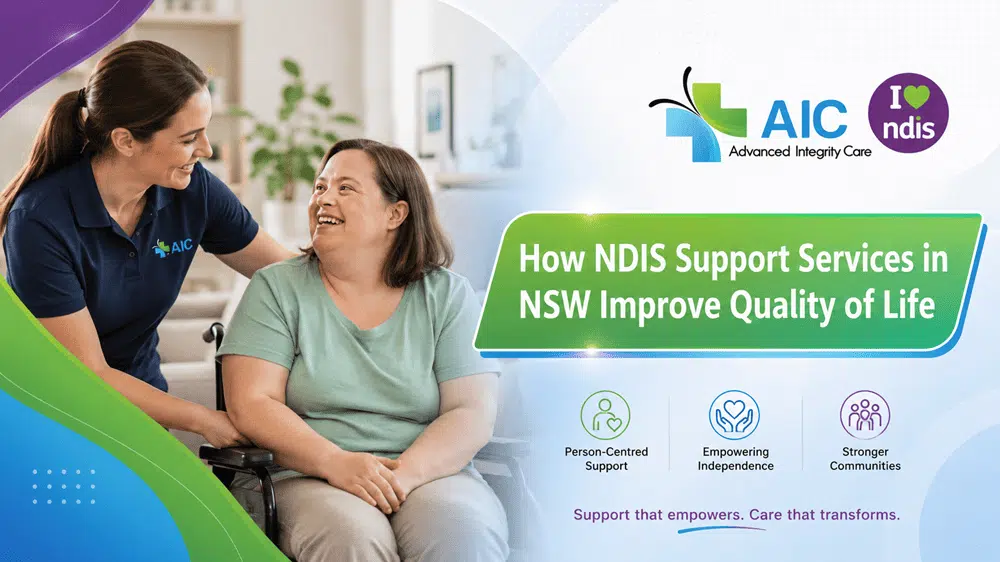
For many people living with disability across New South Wales, everyday life can feel easier, safer and more meaningful when the right support sits around them. That is where NDIS support services in NSW can make a real difference. The National Disability Insurance Scheme does more than fund care hours. It helps people build confidence, stay connected, learn daily skills, access their community and live with more choice.
At Advanced Integrity Care – NSW, we regularly observe that incremental development enhances the quality of a person’s day. For example, a participant initially may need assistance making food. With the right prompting, they then start making their own shopping list, catching transport with assistance or participating in a local hobby group. It may sound basic, but instances like these can radically change the way a person views their own independence.
What Are NDIS Support Services?
NDIS support is services that assist people with disabilities in reaching their personal goals with the guidance of expert qualified personnel. These supports could be in the areas of personal care, community access – supported independent living, respite support, nursing and skill development or daily task assistance.
NDIS plans are not meant to be the same for everybody and that is a good thing! Someone might require daily living support in Newcastle, someone else with social participation assistance in Western Sydney or the Central Coast or regional NSW. So, a good provider should listen, shape support around the participants routine, culture, family and comfort level. Get details on Respite Care Service in NSW.
Why Quality of Life Matters in Disability Support
Life quality is not everything about health. That also encompasses dignity, saying no and yes, safety, friendships, purpose and controlling the daily decisions. With the effective disability support services NSW, people are more likely to feel less isolated and they can take control over their own life.
For instance, this could mean that support workers assist a participant to go places like appointments or family visits, participate in local community events or utilise skills at home. Plus families can feel more settled knowing their loved one is receiving care that is reliable, respectful and consistent.
Key Areas Where NDIS Support Improves Daily Life
| Support Area | How It Helps Participants | Quality of Life Benefit |
| Personal care | Help with showering, dressing and grooming | Builds dignity and comfort |
| Daily living support | Meal prep, cleaning, routines and shopping | Creates safer, calmer days |
| Community access | Support to attend events, appointments and outings | Reduces isolation |
| Skill development | Budgeting, cooking, travel training and communication | Builds independence |
| Respite care | Short-term support for participants and families | Reduces carer stress |
| Nursing support | Health monitoring, medication support and care planning | Improves safety and wellbeing |
Building Independence at Home
The fact about a house is that it must be such that you can have an Easy to A Safe embrace and your soul really should reside in a serene and comfort zone. Whereas, without proper support everyday tasks becomes a source of stress. NDIS daily living support helps the participants develop routines relating to meal preparation, household chores and other essential tasks such as laundry, medication reminders and planning their week in advance.
Importantly, quality support knows when to let go. Instead, it asks them to do as much as they can on their own. So a support worker could bake some meals with the participant as a pilot project. They would learn to safely use a knife and chop vegetables; stick to an easy recipe or choose healthier items in the grocery store. And that does indeed make confidence grow. Looking for a Independent Living Service in NSW?
Supporting Community Participation
Sociability is a big contributor to wellbeing. However, people with disabilities still experience barriers to participating in their community activities. Transport, anxiety, communication difficulties, mobility issues and lack of confidence can all be obstacles.
And this is where NDIS community participation NSW support starts to matter! An example of a support worker would be to help a participant go out to art classes, gyms, library groups, community centres, volunteering or even help attend family events or appointments. Furthermore, going out on a regular basis has increased the confidence and visibility of people.
Community access also gives participants a chance to practise real-life decision making. They may choose where to go, what to buy, who to meet and how long to stay. These choices matter, because they support independence and self-worth.
Helping Families and Carers Feel Supported
Families and carers provide so much of themselves. But care can get to be a tiring business, particularly round the clock — With NDIS respite care, families in NSW can take a much-needed break while participants still receive the safe and caring assistance they rely on.
Depending on the type of assistance and needs stated in the participant plan, respite is or may not occur during: Respite at home; Respite in the community; or Short-term accommodation. Additionally, it can reduce burnout, improve family bonding and provide the participants a fresh change of pace.
Otherwise they feel guilty when requesting respite for the very first time. But it is not selfish to take a break. Having an opportunity for respite often returns the carer more patient, energised and emotionally balanced. Get details on Community Access Service in NSW.
Improving Health and Safety
Likewise, some participants require additional health-related assistance because they experience complex care needs, long-term medication regimes, impaired mobility or operate with chronic conditions. Trained staff and nursing support can enhance safety at home and in the community, Blackwood said.
NDIS nursing services NSW may aid in monitoring health & exam, giving help with wound care, the admin of drugs as well as continence treatment via intending to ally your health professionals. Moreover the possibility of continual support can be used to pick up on early changes, when small problems blow into big ones.
A reliable provider should also follow safe care practices, respect participant rights and communicate clearly with families, coordinators and health professionals.
Encouraging Choice and Control
The NDIS places strong focus on choice and control. This means participants should have a say in who supports them, when support happens and how daily care is delivered.
For example, one participant may prefer a quiet morning routine, while another may enjoy getting out early for community activities. Likewise, cultural background, language, food preferences and personal boundaries should always guide support.
At Advanced Integrity Care – NSW, person-centred support means we do not rush people into a standard routine. Instead, we work with the person and their support network to create care that actually fits their life.
Choosing the Right NDIS Provider in NSW
Not all support feels the same. The right provider should offer more than staff availability. They should bring patience, clear communication, reliability and genuine respect.
What to Look For in a Provider
| What to Check | Why It Matters |
| Person-centred approach | Support should match the participant’s goals |
| Trained support workers | Skills and safety improve care quality |
| Clear communication | Families and participants stay informed |
| Flexible services | Needs may change over time |
| Local NSW knowledge | Local providers understand nearby services and communities |
| Respectful care | Dignity should always come first |
Before choosing a provider, ask how they match support workers, manage changes, handle feedback and involve participants in decisions. Also, notice how they speak to the person with disability. Respect starts in the first conversation. Looking for a Nursing Services in NSW?
Why Local NSW Support Makes a Difference
NSW is diverse. People in Sydney might not experience the same challenges as those in Newcastle, Wollongong and the Central Coast or in regional towns. Therefore, local knowledge matters.
A Local NDIS Provider in NSW will help participants connect to community centres, health services and transport options that are near them; they can also assist with any social activities. Support workers familiar with the area can also help make outgoings easy and stress free.
Having local support makes families feel much more connected. They engage with a team in the know, ready to respond fast rather than an impersonal service several miles away.
Related Articles:
» NDIS Wound Care Services in NSW
» Nursing Services for NDIS Participants in Newcastle
» Navigating NDIS: Presenting Health Outcomes and Evidence
» Chronic Wounds & the NDIS: Can You Get Funding for Care?
» How to Get NDIS Disability Services in Newcastle?
Enhancing Independence Through NDIS Support in NSW
There are many practical uses of NDIS support services in NSW that surely help a person gain some quality of life. They enable individuals to be more secure in the home, their engagement levels in the community and decisions taken at each moment. They also lend a helping hand to families and allow them to relax and aspire for lasting independence.
Good disability support is built on one idea, that everyone has the right to a life of dignity and purpose, with connection at its core. But given the correct provider, NDIS can turn into proper money system. It can serve as a route to living better, more fully and comfortably.

