
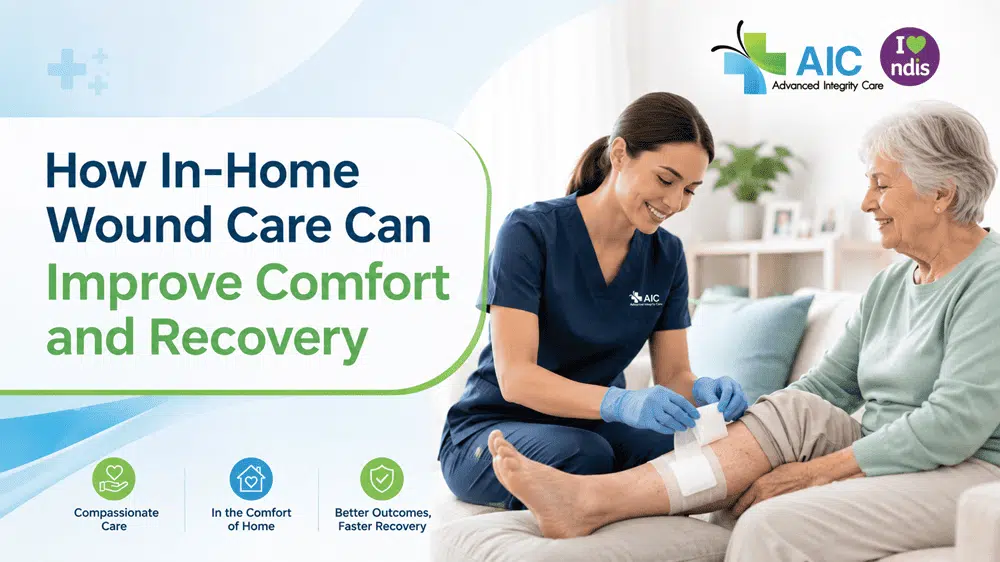
When a person is healing from a wound, comfort — scientifically and anecdotally — is as important as clinical care. Getting to appointments can, for many across NSW, be tiring, painful and stressful. This is why providing wound care in homes has become an integral support for aged and injured people along with people who need help recovering after undergoing surgery or getting hurt.
In-home nursing support at Advanced Integrity Care – NSW is not only with dressing changes. It helps people be safer, more relaxed and feel more supported while they are recovering in their home. In addition, by regularly checking the wound or dressing changes identifying changes before a preventable pain and healing delay would occur.
What Is In-Home Wound Care?
Home wound care refers to an experienced nurse or trained healthcare professional visiting a person from home, to evaluate, clean, dress and monitor wounds while also helping support healing. The specific type of care will be determined by the patient, however, it can digest a range of post-surgical wounds to pressure injuries and diabetic wounds to skin tears or burns as well as any level of minor mobility.
Nonetheless, wound care is never a “cure-all”. Each ulcer should be evaluated correctly, since age, circulation, nutrition, diabetes, mobility, and general health affect healing. Get details on Wound Care Service in NSW.
Common wounds supported at home
| Wound Type | Common Cause | How Home Care May Help |
| Post-surgical wounds | Operation or stitches | Dressing changes, monitoring and comfort support |
| Pressure injuries | Long periods sitting or lying down | Positioning advice, skin checks and pressure relief |
| Diabetic wounds | Reduced sensation or circulation | Regular checks and early reporting of changes |
| Skin tears | Fragile skin, bumps or falls | Gentle dressing and protection from further damage |
| Leg ulcers | Poor circulation or swelling | Ongoing monitoring and wound management support |
Why Comfort Improves Healing
Calm and supported people tend to do better at recovery. Ensure Home Rest People can rest in a familiar place, in normal temperature, near family can follow a routine and avoid travelling. Family members and support workers can also be trained to help with daily care safely.
Take someone with a painful leg wound who has travelled to a clinic: they might get fatigued. But in NSW home care, a nurse comes to them. Thus, the individual will conserve energy while alleviating stress and concentrating on recovery.
Comfort also includes emotional wellbeing. Wounds can feel embarrassing, frustrating, or worrying, especially when healing takes longer than expected. Therefore, respectful home nursing support can make a real difference. Looking for a Medication Management Service in NSW?
How In-Home Wound Care Supports Faster and Safer Recovery
While no provider can promise a healing time, professional wound support may help recovery stay on track. Regular visits allow nurses to check the wound, change dressings correctly, and notice warning signs early.
Key ways home wound care helps
| Support Area | Benefit for the Person |
| Regular wound assessment | Helps track healing progress |
| Correct dressing technique | Supports a clean wound environment |
| Infection monitoring | Helps identify redness, swelling or discharge early |
| Pain and comfort checks | Improves day-to-day wellbeing |
| Education | Helps family or carers understand safe wound care |
| Coordination | Supports communication with GPs, specialists or allied health teams |
In many cases, simple things make a big difference. For instance, keeping the wound clean, using the correct dressing, managing pressure, eating well, staying hydrated and reporting changes quickly can all support recovery.
Reduced Travel and Less Disruption
In-home nursing care has the advantage of being convenient. The transport of people to and from appointments, waiting in waiting rooms long before their planned time slots, moving around when they ache. This is beneficial especially for the people with impaired mobility, impairment and chronic illness or posthospital treatment.
Home care also minimizes disruption to family routines. Instead of having to schedule time off from work or finding transportation, members can stay at home and still be involved. This gives you peace of mind, especially if the wound needs to be changed regularly. Get details on Nursing Service in NSW.
Personalised Care in a Familiar Environment
All homes are unique, and all people have different daily strategies. Thus, nurses can really appreciate the home environment of wound healing through this approach to care.
For instance, the nurse may observe that someone spends long periods in a specific chair, sleeps positionally compressed against the wound or has difficulty keeping dressings dry while showering. The support is now much more practical and much better tailored to your needs.
This type of care can also help with:
- pressure injury prevention
- safe movement and positioning
- wound dressing routines
- hygiene guidance
- skin protection
- family and carer education
- referral recommendations when needed
Early Signs That a Wound Needs Professional Attention
Some wounds need urgent review. While mild discomfort can happen, certain changes should not be ignored.
| Warning Sign | Why It Matters |
| Increased redness or warmth | May suggest irritation or infection |
| Swelling around the wound | Can show delayed healing or infection risk |
| Bad smell or unusual discharge | Needs clinical review |
| Fever or chills | May indicate infection spreading |
| More pain than usual | Could mean the wound is worsening |
| Wound getting larger | Needs reassessment |
| Black, yellow or unusual tissue | Should be checked by a nurse or doctor |
If any of these signs appear, the person should contact their nurse, GP, or emergency services depending on severity. Looking for a Disability Services in NSW?
In-Home Wound Care and NDIS Participants
The NDIS wound care nurse can provide support for those in the program who have a disability that impacts on their ability to look after wounds. This may be clinical nursing support, wound checks, dressing changes, pressure care education and linkage to other supports.
Funding is based on the individual plan, their desired goals and clinical evidence of need related to their disability. So make sure you discuss arranging services with a support coordinator, plan manager, GP or NDIS provider.
At Advanced Integrity Care – NSW, the focus is to provide respectful, practical and person-centred care that supports independence wherever possible.
Better Support for Families and Carers
Family members can provide overwhelming support for wound care. Most feel anxious that they will do the wrong thing, not pick up a clinical sign of infection, or hurt while trying to help. Consequently, domestic support professionals reduce pressure on informal carers.
A nurse can describe what is happening, the changes to monitor for and how best to support that individual safely in between visits. Moreover, carers can put questions in a relaxed environment. This also means care becomes much more clear and less stressful. Get details on Independent Living Service in NSW.
What Happens During a Home Wound Care Visit?
A typical visit may include a wound check, dressing change, comfort assessment and care notes. The nurse may also ask about pain, appetite, sleep, mobility, medication changes and general health.
Example visit structure
| Step | What May Happen |
| 1. Review | Nurse checks health changes and previous wound notes |
| 2. Assessment | Wound size, skin condition and healing progress are reviewed |
| 3. Cleaning | Wound is cleaned using appropriate clinical technique |
| 4. Dressing | Suitable dressing is applied |
| 5. Education | Person or carer receives practical advice |
| 6. Plan | Next visit or follow-up is discussed |
This process helps keep care organised and consistent.
Why Choose Advanced Integrity Care – NSW?
Choosing the right provider matters. A good care team should be reliable, respectful and focused on each person’s comfort. At Advanced Integrity Care – NSW, in-home support is designed to help people feel heard, safe and cared for.
The service may suit people who:
- need regular wound dressing at home
- find clinic visits difficult
- live with disability or reduced mobility
- need post-hospital wound support
- have pressure injury risk
- require nursing support under an NDIS plan
- want family or carers involved in care
Most importantly, the care should support dignity. A wound does not define a person. With the right support, people can recover with more confidence and comfort. Looking for a Community Access Service in NSW?
Simple Tips to Support Wound Recovery at Home
Although professional care is important, daily habits also matter. Always follow the advice of your nurse or doctor, but these general steps may help:
| Recovery Tip | Why It Helps |
| Keep dressings dry unless advised | Helps protect the wound area |
| Eat protein-rich meals | Supports tissue repair |
| Drink enough water | Helps general healing |
| Avoid pressure on the wound | Reduces further skin damage |
| Report changes early | Helps prevent complications |
| Attend follow-up visits | Keeps recovery monitored |
Small steps, when done consistently, can support better outcomes.
Related Articles:
» NDIS Wound Care Services in NSW
» Chronic Wounds & the NDIS: Can You Get Funding for Care?
» How Wound Care Services Improve Recovery and Comfort?
» Different kinds of Wounds and How they need to be Addressed with NDIS
» Benefits of NDIS Wound Care & Medication Management in New South Wales
Enhancing Healing Through In-Home Wound Care
Wound care which is provided in the patient’s residence can definitely increase comfort, minimize stress due to traveling for treatment and provide safer home recovery processing. This also offers a more personalised care to the person, particularly for wounds that require monitoring on a regular basis. Moreover, families and carers may feel more secure when a nurse walks them through the process.
Advanced Integrity Care provides compassionate support with care and respect to the dignity, independence and comfort of people right across NSW. Regardless of how recent the wound is, if it is a slow-healing one, or related to any ongoing health concerns; the right care at home will not only ease recovery but also make it feel much less stressful.

