
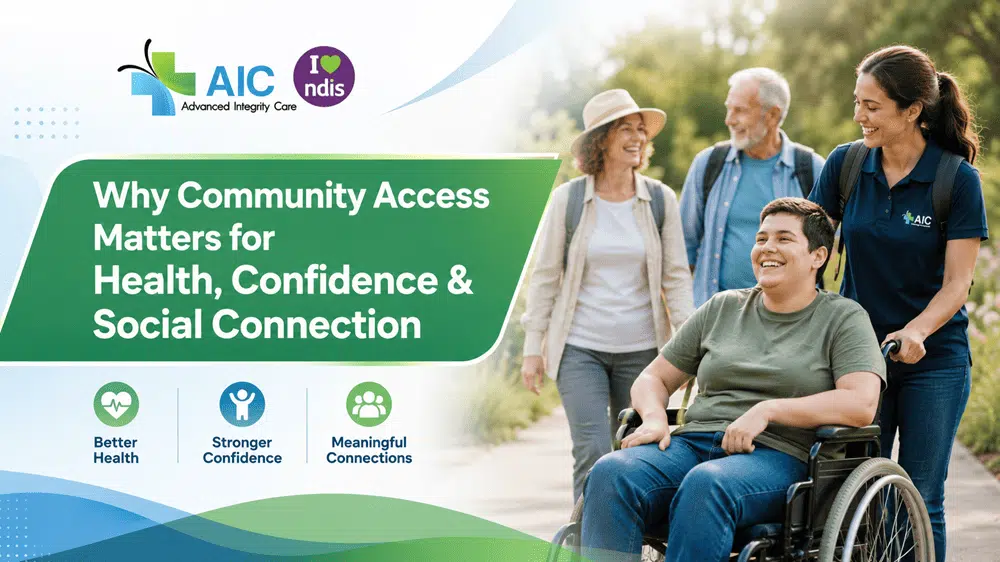
The reduction of everyday life to less than it should be for so many of us: older people, people living with disability, marginalisation, psychosocial challenges or reduced mobility. All of this sounds so easy — going to the shops, going for a walk in the park, attending a community class, a medical appointment or just getting together for coffee. But more often than not, normal functioning and routine can enhance health, be an assistance to independent living and care and foster emotional well-being.
This is why community access support in NSW is so important. That is not merely about: “get outside the house.” Instead, it supports people to establish habits, gain self-esteem, experience social connection and pursue local equity with the community in a dignified manner. The correct assistance can transform isolation into inclusion and hesitation into independence for participants, families, and carers alike.
Community access at Advanced Integrity Care – NSW is about the provision of practical, respectful and person-centred support. The aim remains the same: to support everyone — whether they want to come to appointments, take up social activities, visit family and friends, go shopping for essentials, explore a hobby or build life skills — under one umbrella help every person feel safer, more confident and connected.
Australian health and disability literature reiterates the value of social inclusion. According to AIHW, social isolation and loneliness can have impacts on mental health, physical health, sleep, well-being (as distinct from the absence of a mental disorder), and quality of life associated with a person coping with chronic disease or disability. NDIS research also accepts there are barriers restricted to those with an intellectual disability, a psychosocial disability and autism, so adjusted support is vital.
What Is Community Access Support?
Support that helps a person get out of the house and do things in everyday life is called community access. This includes assistance with travel, communication, social interaction, confidence building, decision making and safe access to public spaces depending on your personal objectives.
Attending a doctor appointment could mean community access for another individual. Or maybe it means signing up for a local club, going to the gym, visiting a library, attending an event at your community centre or learning how to travel more independently. As such, support needs to be tailored. It needs to be tailored to the individual’s ability, desire, culture, daily routine and comfortability level.
Social and community participation may link into Centrelink (or non-Centrelink) goals relating to independence, relationships, recreation, and participating in the life of the community under National Disability Insurance Scheme (NDIS). According to NDIS information, partners can also talk about the community and mainstream support available in a person’s local area. Get details on Community Access Service in NSW.
Why Community Access Improves Health
Health is more than just treatment, medications or appointments. It also involves movement, routine, fresh air, being at peace emotionally and having something to do. When someone participates in community activities on a regular basis, it generally causes them to become even more active and involved.
A short supported walk, for instance, may enhance mobility. Weekly pool event could provide cardio assistance. Doing a craft group to facilitate fine motor skills and attention within. As well, outings can break long stretches of inactivity, which could help provide better sleep and mood.
The critical thing here is that supported community participation gives people a sense of being part of life outside the home. This is important because Isolation can result in increased stress, sadness, chronic low motivation, and unhealthy habits. Therefore, it reinforces that community access is a health-promoting service rather than solely a social activity. Looking for a Independent Living Service in NSW?
Health Benefits of Community Access
| Community Activity | Possible Health Benefit | Example Support |
| Walking in a park | Better mobility, fresh air, improved mood | Support worker assists with transport and safe walking |
| Grocery shopping | Routine, decision-making, movement | Help with lists, budgeting, and safe navigation |
| Medical appointments | Better care continuity | Support with travel, reminders, and communication |
| Group exercise | Fitness, motivation, social contact | Assistance joining and attending sessions |
| Library or learning group | Cognitive stimulation | Support with access, reading groups, or digital skills |
Building Confidence Through Everyday Experiences
It means being in places where you have repeated good experiences. But for a lot of people that experience illness, injury or disability related challenges, anxiety and long stages of isolation, the confidence disappears. This means that community access can gradually restore confidence in everyday life.
Someone may only feel okay going to a familiar place at first. Next — maybe, with contingent support they try a new cafe, new class or the bus. These little steps build up to something big over time.
For example, if someone had been avoiding crowded shopping centres, they may again learn how to cope with busy places, ask for help when needed, make purchases and get home safely. Similarly, a person who is anxious about speaking to others may start with short conversations, and then slowly get into group activities.
This is the change that disability support services in NSW can achieve. The support worker never takes control. Instead, they offer choice, honour pace and support people to practice the skills in-the-moment.
Community Access and Social Connection
Human beings need connection. We need people to converse with, places where we belong and events that may grant significance to our week. However, many individuals with support needs live lonely lives because of obstacles to transportation, barriers to communication; physical impairments; anxiety (or other forms of challenging behaviour) or a lack of access to inclusive opportunities.
These are all barriers but community access services will help to reduce these. They offer assistance to people who wish to continue socialising with friends, attend local events, pursue hobbies and make new connections, as well as ensuring they stay close to family. This allows the individual to form a better social circle.
Social connection also helps you to maintain emotional health. A chat with a friend or an exercise class or a familiar group can help someone realise that they count. Moreover, they may also ease the burden of family caregivers as the person becomes less dependent on them and get larger support. Get details on Respite Care Service in NSW.
Community Access in NSW: Why Local Knowledge Matters
NSW communities are diverse. An individual in Western Sydney may require alternate support than a person in a regional township, coastal suburb or inner-city precinct. Therefore, local knowledge matters.
A provider such as Advanced Integrity Care – NSW can assist participants in accessing parks, shopping centres, health clinics, libraries, community centres and recreational groups located close to them, cultural events that are happening nearby or even transportation methods. Being aware of the local circumstances also allows support staff to plan safer pathways, quieter times, venues that are accessible and activities they enjoy.
This localized approach makes assistance more realistic. It also encourages participants to connect with their local area, instead of relying solely on formal care environments.
Examples of Community Access Activities
Community access should reflect the person, not just a service checklist. Some people enjoy calm, low-pressure activities. Others prefer active outings, sports, volunteering, learning, or social events.
| Goal | Suitable Community Access Activity | Support Outcome |
| Build independence | Shopping, banking, public transport practice | More confidence with daily tasks |
| Improve social skills | Community groups, coffee outings, hobby clubs | Better communication and friendships |
| Support health | GP visits, allied health appointments, walking groups | Improved routine and care access |
| Enjoy recreation | Movies, beaches, parks, sports, music events | More joy and personal choice |
| Learn new skills | Cooking classes, library visits, TAFE/community workshops | Greater confidence and participation |
Person-Centred Support Makes the Difference
The best community participation support starts with listening. What does the person enjoy? What makes them anxious? What goals matter to them? What cultural, religious, family, or lifestyle preferences should the support worker respect?
A person-centred plan may include:
- Preferred activities and locations
- Transport needs
- Communication preferences
- Mobility and personal care considerations
- Safety risks and comfort levels
- Short-term and long-term community goals
- Family or carer input where appropriate
Because every person has different strengths, the support must stay flexible. Some days may require encouragement. Other days may require patience, calm reassurance, or a change of plan. Nevertheless, every outing can still support progress. Looking for a Disability Services in NSW?
How Community Access Supports Families and Carers
Community access is also an asset for the family. Families rejoice when any participant becomes more confident in the outside world. They can see their loved one shine, learns new skills and participate.
In addition, obtaining regular assistance also provides caregivers time to recharge, organize their feelings, catch up on work or tasks and take care of themselves. This is critical since sustainable care asks for balance. Participants get valuable nuanced support → Families worry less, feel more assured about tomorrow.
Choosing the Right Community Access Provider in NSW
Choosing the right provider matters. Families and participants should look for a team that offers reliability, compassion, strong communication, and genuine respect. The provider should also understand safety, personal goals, and local community options. Get details on Nursing Services in NSW.
What to Look For
| What Matters | Why It Matters |
| Person-centred approach | Support matches the participant’s goals, not a fixed routine |
| Reliable support workers | Consistency builds trust and confidence |
| Local NSW knowledge | Activities and transport plans become easier |
| Respectful communication | Participants feel heard and valued |
| Flexible planning | Support can change as needs and confidence grow |
| Safety awareness | Outings remain comfortable, practical, and well-managed |
Why Advanced Integrity Care – NSW Supports Meaningful Community Access
Advanced Integrity Care – NSW knows how personal community access is. It could be a trip to the local market, but it has the potential to change lives. Given proper support, an individual has the potential to feel healthier, more equipped and integrated into week-day life within a community.
It is not only about transport or attending. What the service provides is confidence, choice, engagement and dignity. From social connection to independence, from routine to wellbeing – community access support can assist individuals in taking consistent strides towards living a richer life.
Related Articles;
» How Community Participation Support in NSW Boosts Wellbeing?
» Community Nursing vs. Clinical Nursing: What’s the Difference?
» Community Access from a SIL Home: Transport & Planning Tips
» How to Access NDIS Community Activities for the Disabled in Newcastle?
» NDIS Community Engagement Programs for People with Disabilities
Community Access: The Link to a Better Life
The access of communities, because life should not be limited by barriers. All residents should have opportunities to access local features, connect with others, develop skills and engage in meaningful activities. The right care can offer a pathway to improved health, enhanced self-esteem and genuine social interaction, for those who need extra support.
Through intelligent support and design, Advanced Integrity Care – NSW guides participants from seclusion to participation in an active, connected life.

